
FENS Forum 2026: Exploring the Future of Neuroscience and Gender Equity
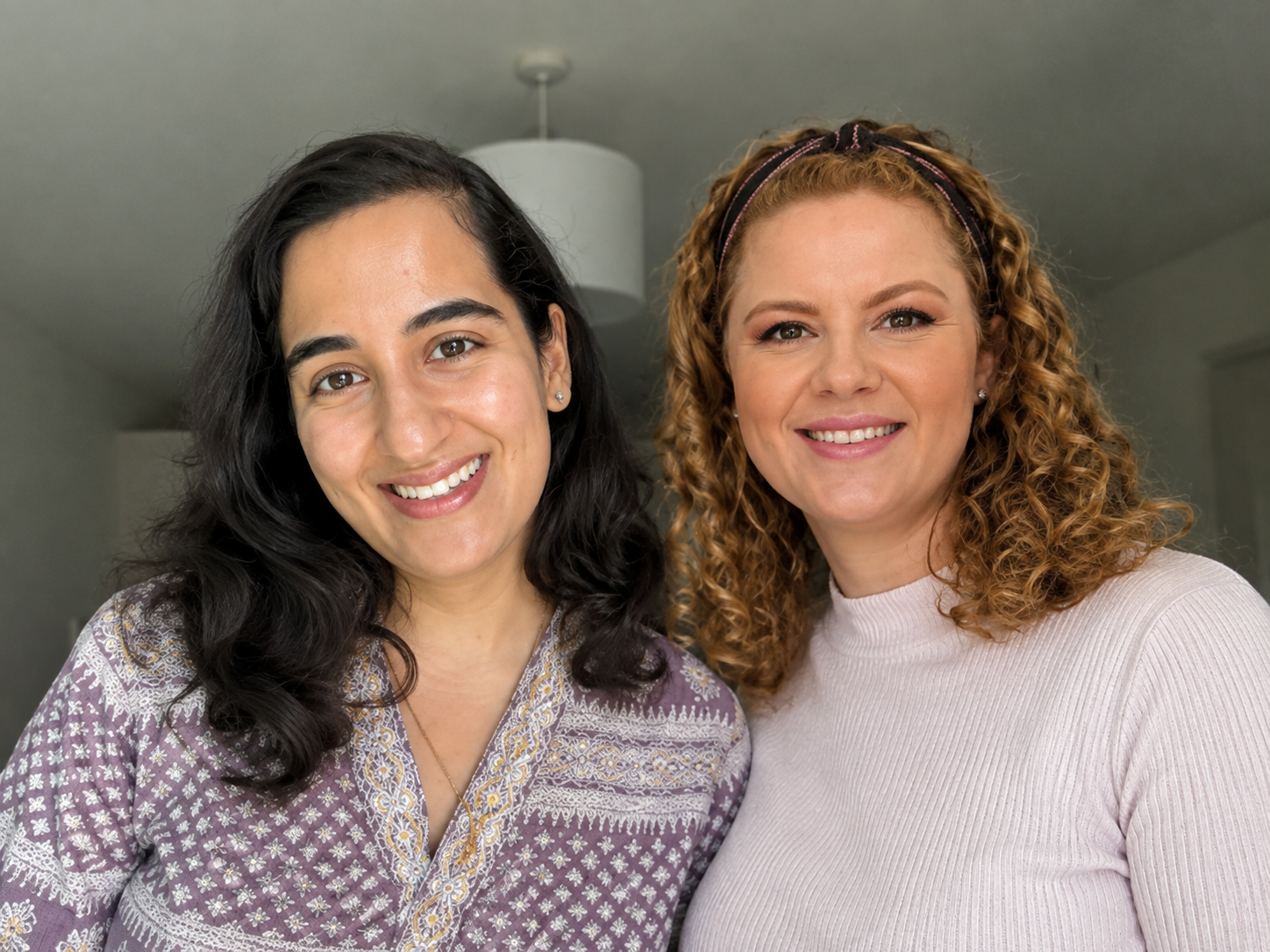
In early July, the two of us were fortunate enough to attend the Federation of European Neuroscience Societies (FENS) Forum 2026, hosted at the Fira Barcelona Gran Via, by the Spanish Society for Neuroscience. With over 8,000 attendees from 92 countries, 5,040 posters and 300 speakers, the event was the largest gathering of neuroscientists on the European continent in history. The FENS forum is held every 2 years, and Barcelona was the perfect host for the conference, given the country’s strong influence and history in neuroscience; most notable is Santiago Ramón y Cajal who is known as the “the father of modern neuroscience”. It also boasts several famous institutes such as the CRG (Centre for Genomic Regulation) and the Cajal Institute.
The forum was a great space to catch up on the latest research in the field but, here at WiNUK, we were interested to find out how one of the biggest events in the neuroscience calendar is pushing for gender equity in neuroscience. The forum included fantastic lectures, symposiums and networking sessions, covering a range of topics from development and stem cells to neurodegenerative diseases. It is an incredible opportunity for early career researchers (ECRs) to present their work.
The FENS forum opening ceremony on Monday 6th July was an incredible celebration of both science and culture. Energetic dance performances including a flamenco and street dance group welcomed us to Barcelona. The opening ceremony featured winners from the international Brain Bee competition, featuring young winners who flew in from countries including Ukraine and Iran to attend FENS. There was also a representative from the Catalonia government that was proud to host Barcelona for the FENS event.
The Brain Debate: 'From animals to alternatives and the future of research models' featured Professor Angela Roberts (Cambridge, United Kingdom) who discussed the use of the Marmoset animal model in her research on neuropsychiatric and neurodegenerative disorders. Although, currently, non-human primates are only used in 0.2% of research, this area is the most controversial. The speakers concluded that basic and fundamental research still requires the use of animals, but that transparency in research is especially important for the general public. Increasing the use of alternative models, such as stem-cell-based organoids, are required to move the field forward and to reduce the dependence on animals. The debate also featured Professor Sergiu Pasca (Stanford University, United States) who is a major leader in the 3D brain organoid models to model neurodevelopmental disorders such as autism.
The Scientific Programme
One of the first stand-out features of FENS, compared to smaller national conferences, was the sheer scale of the scientific programme: there were a staggering 56 symposia, 9 plenary talks, 15 special interest events and countless other special lectures, award presentations, sponsored sessions, technical workshops and networking events. Within this, there were two symposia, one plenary and a networking event that were putting women first and foremost. The symposium “The other half: sex differences in neuroscience", chaired by Dr Kerstin Lenk (Graz, Austria), focused specifically on sex differences in glial cells, discussing how these may differ in brain development and contribute to stress responses and disease aetiology in conditions from depression to Parkinson’s disease.

A later symposium, co-chaired by Dr Roberta Haddad-Tovolli (Barcelona, Spain) and Dr Marc Claret (Barcelona, Spain), focused on neuroendocrine plasticity in the female brain across physiological states, with a specific focus on pregnancy, post-partum and ageing. Work from Dr Haddad-Tovoli and Dr Nicolas Renier (Paris, France) highlighted dynamic changes in the pregnant brain, ranging from changes to dopamine circuitry and cortical connectivity in cravings, to increased neurovascular plasticity and angiogenesis in pregnancy - which has been linked to maternal behaviours such as nest making in mice. All of the speakers stressed the dynamic changes that the female brain experiences as a result of hormones; an area that still requires much more research. It was particularly heartening to see some of the research in this symposium being funded by the EU Enhancing Sex-Inclusive Biomedical Research Initiative (EU-SABV), the first Europe-wide effort to encourage training, policy and funding to ensure biological sex is appropriately studied.

Plenary Speaker Professor Holly Ingraham's (San Francisco, USA) lecture continued along a similar vein, considering sex-specific hormonal changes throughout the lifespan and how these may impact women's health. Professor Ingraham discussed two aspects of her research into oestrogen-specific modulation of brain-body activity: firstly, elucidating an oestrogen-sensitive circuit from the medial basal hypothalamus which modulates sensitivity of the bladder and colon, which is now being looked at to better understand female incontinence and IBS. Secondly, looking at the role of oestrogen signalling in mediating CCN3 release, a neuropeptide which supports bone growth and is significantly increased during the lactation period in mice. The identification of CCN3’s role in this pathway has been used to illustrate accelerated fracture repair in recombinant CCN3 mice, and is hoped to be a potential therapeutic target for conditions such as osteoporosis, which overwhelmingly affects women.
These sessions shared some incredibly exciting work in developing a better understanding of women's health and development of new therapeutics, but also highlighted how much work is still required to understand sex differences in the brain and their impact on the rest of the body. It was also heartening to see how many other researchers presenting work were considering sex and gender differences in their work, however, there is still room for growth and improvement on this. For example, one speaker started their talk by stating that women are 1.6x more likely to have anxiety, but then did not discuss any sex-specific differences or attempts to consider this within their work. Overall, the programme did credit to some of the fantastic research, and the amount of sex-specific research seems to be on the rise.
Poster Sessions!

There were nine poster sessions throughout the five-day conference. Both Ellie and Aarushi presented posters, Aarushi’s poster was titled “Can early forebrain patterning/Holoprosencephaly be modelled in vitro using 2D/3D hiPSC models?” in the Neurodevelopmental Pathways and Stem Cell Models part of the poster session. This provided an opportunity for Aarushi to discuss her work with colleagues in the field and brainstorm novel ideas for
future experiments that she had not considered. Speaking with peers highlighted how the PhD experience differs between countries - i.e., in the USA and India you need a minimum number of publications in order to complete a PhD, whereas in the UK this is not a requirement.
FENS and Equality, Diversity and Inclusion
Another notable feature of FENS forum was a range of initiatives and events to promote equality, diversity and inclusion and positive research culture. It was great to see networking events hosted by EU-SABV to promote sex-inclusive neuroscience research, and by the ALBA network promoting diversity and equity in brain sciences. One symposium at the event was dedicated to discussing neuroscience education and research in Africa, led by the secretary of the Society of Neuroscientists for Africa; it was a small but significant step to better understanding and inclusion of the global south in neuroscience research.
Looking beyond the scientific programme, FENS provided a host of other initiatives to support diversity in its attendees. There was significant encouragement and support of ECRs, with specific travel grants, visiting researcher programmes, careers sessions and networking events all set up to support burgeoning neuroscientists. On-site childcare was provided for conference attendees, along with a dedicated nursing room, which was a very positive inclusion for parents. However, there was a fee charged for childcare, and it would have been nice to see childcare grants or more support here to facilitate parent academics’ attendance. Mindfulness sessions and art activities were also a great way to help encourage break taking and good research culture.

One highlight for Ellie was the art meets neuroscience programme. Alongside an exhibition of Santiago Ramon y Cajals’ infamous illustrations of neurons, conference attendees were encouraged to get involved in painting large scale artworks in his style. This was facilitated by La Casa de Carlota, an award-winning, UN-recognised design studio, including creatives with intellectual disabilities who have pioneered inclusive art practice. This was a great way to decompress in the middle of a hectic conference, and being able to take a small piece of these artworks home at the end of the week felt like a really special souvenir of a very community-focused event.
Early Career Events/Networking Sessions
As Aarushi is reaching the end of her PhD, she was interested in some of the ECR events focused on careers! There was an event titled “A world full of opportunities: neuroscientist careers outside academia”. This event featured a freelance writer, a policy adviser and a R&D scientist who had become the head of a department. Aarushi learnt about the advantages of entering R&D science over academia, such as having different pressures and may contribute to more translatable research that has great world impact. There are also advantages of working in academia that allow an individual to have more creativity and freedom. She also learnt about adjusting her CV to highlight soft skills that are essential in industry roles. The session titled “You Belong: A Conversation on Imposterism for and by Neuroscientists” highlighted the major challenge of imposter syndrome, self-doubt and low self-esteem that is often experienced by ECRs in high pressure environments. The panel discussed several strategies to overcome imposter syndrome, such as reaching out to your peers or mentors for support. It was reassuring to learn how common imposter syndrome is in academia and how almost everyone has experienced this at some stage in their careers.

Aarushi was particularly keen to attend the British Neuroscience Association (BNA) social evening event, especially because I had been awarded a BNA FENS Forum Bursary. This was a great opportunity to network with members of the BNA team and other ECRs from the UK. Other networking events were hosted by the ALBA network and country specific sessions - such as the German, Portuguese and Austrian Neuroscience society.
Industry Partner Led Sessions
Over 150 exhibitors from industry, research and non-profit sectors were also present at the FENS forum. This included major organisations, such as Molecular devices who gave a talk on the generation of automated 3D midbrain/forebrain organoids using the CellXpress.ai Automated Cell Culture System. The cellXpress.ai automated liquid handling robots that were able to transfer embryoid bodies generated from a 96 well plate to a 24 well plate. I was also fascinated to hear the talk from Biotechne in which they introduced the COMET device that could immunostain up to 40 antibodies in a session, whilst simultaneously imaging them with an in-built microscope. Learning about this cutting-edge technology was eye opening!
How Did We Rate It?
Ellie: FENS is one of the biggest conferences I have been to, and there was a lot of really great work across the programme. The diversity of work was also very impressive, and I met some absolutely lovely people. The sheer size of it could be intimidating as a first conference to attend, but there is an awful lot to be gained from going! I would definitely go again.
Aarushi: My advice when attending such a big conference is to plan which symposiums to attend in advance, and research which posters are most suited to your interest. Put yourself out there and don’t be afraid to start a conversation with someone in your field! There will be lots of opportunities for networking. It's impossible to attend every session but try your best to attend ones that interest you the most! It was an incredible conference, where we were able to learn from experts in the field and I would highly recommend it to other ECRs!
This article was written by Ellie Jackson & Aarushi Vaidya and edited by Rebecca Pope, with graphics produced by Ginevra Sperandio. If you enjoyed this article, be the first to be notified about new posts by signing up to become a WiNUK member (top right of this page)! Interested in writing for WiNUK yourself? Contact us through the blog page and the editors will be in touch.


Comments