
ARUK London Science Day; a ‘soft launch’ into science
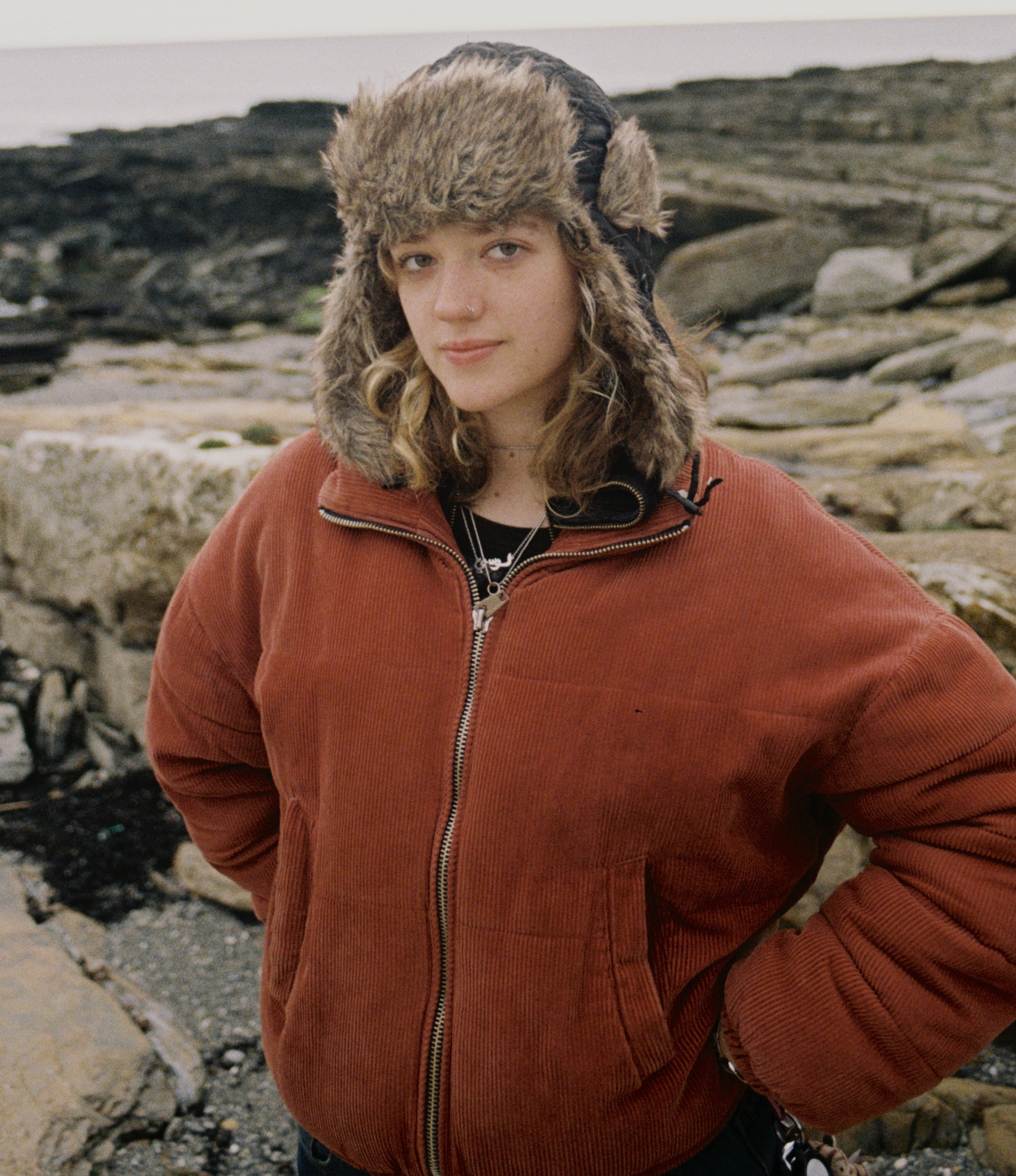
A few weeks ago, I went to my first scientific conference. Since moving from Aberdeen to London for my master’s, I’ve loved attending a wider range of events that bring researchers together from across the UK and beyond. I’m currently doing an MRes in Experimental Neuroscience at Imperial College London, where my first research project looks at activity-dependent presynaptic organisation in ageing. I’m really interested in dementia and neurodegenerative diseases, so I was excited to attend the Alzheimer’s Research UK (ARUK) London Science Day at the Royal Society. Attendees came from Imperial, King's College London, UCL and Queen Mary University of London. It was also the final London network meeting, as ARUK moves towards events organised by research area rather than by geographical proximity.
Prof. Erin Schuman (from the Max Planck Institute for Brain Research, Germany) gave the keynote talk on ‘Proteostatic control mechanisms at the synapses’. I hadn’t come across her work before, but her passion and her ability to make complex ideas engaging left me wanting to read more, especially given my own interest in how synaptic proteins are organised. Earlier this year, she was awarded the 2026 Kavli Prize in Neuroscience for her discovery that neurons make new proteins locally at synapses, where they are needed. During her talk, she also mentioned that she will soon join UCL as Director of the Queen Square Institute of Neurology, an exciting move for the London neuroscience community.
A highlight for me was the flash talk session, chaired by Prof. Magdalena Sastre, in which eight researchers each had five minutes to present their work. I hadn’t come across this format before, and the quick pace kept me engaged the whole time. Just as importantly, the flash talks gave early-career researchers a platform: the speakers ranged from a recent BSc graduate to PhD students and postdocs. It was motivating to see such a wide range of topics and people, and how excited each speaker was about their research.
The longer talks were broken up by regular poster and networking sessions, the longest of which was immediately after the flash talks. This gave you the opportunity to find anyone whose research had caught your eye. For me, it was also a great chance to spend time with others from my MRes cohort who had come along, share our interests and discuss what we had heard so far.
In the afternoon, Prof. Giovanna Mallucci (University of Cambridge) spoke on ‘From mechanisms to medicines in neurodegeneration’. She discussed her latest findings as well as her research into cold-water exposure, work that has reached a wide audience through coverage such as the BBC’s article, Could cold water hold a clue to a dementia cure?
The day ended with poster prizes, followed by a drinks reception. I was delighted to see Leire Garrido Perez, a PhD student in my current lab with Dr Carola Radulescu, win a poster prize. I asked Leire about the award and her work:
“Thrilled to receive the poster prize at the ARUK Science Day! My research combines expansion microscopy with cyclic immunofluorescence to look at how our synaptic molecular landscape reorganises during normal ageing. Ultimately, our goal is to uncover early molecular vulnerabilities that could pave the way for targeting age-related neurodegeneration.”
Overall, the day was a perfect introduction to conferences - a kind of ‘soft launch ’- before I begin to attend longer, multi-day meetings, and the Royal Society made it feel like a real occasion. As an MRes student, it was easy to feel a little overwhelmed by the expertise in the room, but that’s exactly what made it such a valuable place to be. I left feeling encouraged to keep pursuing my own research, and I’m already looking forward to the next one.
Upcoming events to keep an eye on:
Online public event on 8th December 2026, ‘Are we a year closer to a cure?’ Link here.
Additionally, the BNA2027 International Festival of Neuroscience is next April in Belfast, with ARUK as a Festival Programme Partner!
This article was written by Lucy Browning and edited by Rebecca Pope, with graphics produced by Saba Keshan. If you enjoyed this article, be the first to be notified about new posts by signing up to become a WiNUK member (top right of this page)! Interested in writing for WiNUK yourself? Contact us through the blog page and the editors will be in touch.


Comments